
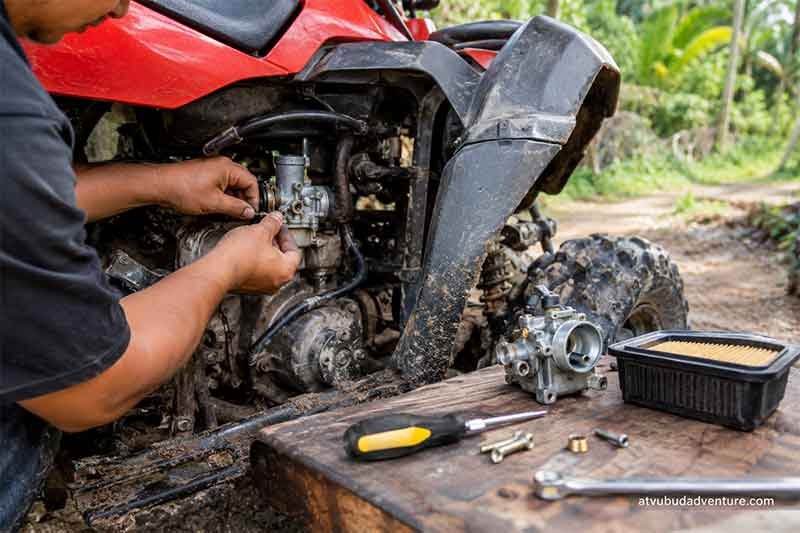
Adjusting an ATV carburetor can help restore smooth idling, improve throttle response, and reduce common engine problems. If your ATV struggles to start, stalls at idle, or hesitates when you accelerate, the carburetor may need attention. However, similar symptoms can also come from dirty air filters, old fuel, clogged jets, or ignition problems.
Understanding how ATV carburetor adjustment works can help you identify the cause before changing any settings. With the right approach, you can troubleshoot common issues without making the engine run worse.
What Does Adjusting an ATV Carburetor Do?
An ATV carburetor mixes fuel with air before delivering the mixture to the engine. The correct ratio allows the engine to run smoothly under different operating conditions.
When the mixture is too rich, the engine receives too much fuel relative to air. This can cause black exhaust smoke, poor fuel economy, and spark plug fouling. A mixture that is too lean contains too much air relative to fuel and may cause hesitation, surging, or excessive engine heat.
Adjusting the carburetor helps restore the proper mixture and idle speed. The correct settings depend on your ATV’s engine design, carburetor type, and manufacturer specifications.
When Should You Adjust an ATV Carburetor?
Before turning any adjustment screws, look for symptoms that suggest a carburetor problem.
1. Rough Idling or Frequent Stalling
If your ATV engine struggles to stay running at idle, the idle speed may be too low. A dirty pilot jet, restricted fuel supply, or air leak can cause similar symptoms.
2. Poor Throttle Response
An engine that hesitates when you open the throttle may have an incorrect fuel mixture or a blocked carburetor passage. Check the air filter and fuel quality before changing the settings.
3. Black Smoke or Poor Fuel Economy
Black exhaust smoke can indicate an excessively rich mixture. Possible causes include a clogged air filter, a stuck choke, a high float level, or incorrect carburetor settings.
4. Hard Starting
If your ATV becomes difficult to start, inspect the choke mechanism, fuel supply, spark plug, and carburetor jets. Carburetor adjustment alone will not solve every starting problem.
For more troubleshooting advice, read our guide to common ATV problems and how to fix them.
How to Adjust an ATV Carburetor Step by Step
The following steps provide a general approach for conventional gasoline ATVs with adjustable carburetors. Always follow the service manual for your particular model.
Step 1: Check the Air Filter and Fuel System
Start by inspecting the air filter. Clean or replace it according to the manufacturer’s instructions if it is dirty or damaged.
Next, check the fuel for contamination and make sure the fuel line is not restricted. If the carburetor contains old fuel deposits, cleaning it may be necessary before any adjustment can work properly.
Step 2: Locate the Adjustment Screws
Most conventional carburetors have an idle-speed screw and may have a separate mixture screw.
The idle-speed screw controls how much the throttle remains open at idle. The mixture screw affects the air-fuel mixture in a particular operating circuit, depending on the carburetor design.
Do not assume every screw has the same function. Some mixture screws regulate fuel, while others regulate air. Their locations and adjustment directions vary by model.
Step 3: Warm Up the Engine
If the manufacturer permits adjustment with the engine running, warm it to the specified operating temperature before setting the idle.
Keep the ATV outdoors in a well-ventilated area. Secure it on stable ground, keep clothing and hands away from moving parts, and avoid touching hot engine components.
Step 4: Adjust the Idle Speed
Turn the idle-speed screw in small increments, following the service manual’s instructions, until the engine reaches the specified idle RPM.
If the engine continues to stall or the idle fluctuates significantly, investigate other causes instead of continually increasing the idle speed.
Step 5: Adjust the Fuel Mixture if Applicable
Only adjust the mixture screw if your carburetor design and service manual allow it.
Make small changes and observe the engine’s response. Some carburetors require a specific baseline setting, while others need a different procedure or specialized equipment.
Never force a mixture screw against its seat. Overtightening can damage the screw or its seat and make accurate adjustment difficult.
Step 6: Test the ATV
After completing the adjustment, check whether the engine starts reliably, idles consistently, and responds smoothly to the throttle.
Allow the engine to cool before inspecting components near the exhaust. If the ATV still runs poorly, a carburetor cleaning, fuel-system inspection, or professional diagnosis may be needed.
Common Mistakes When Adjusting an ATV Carburetor
One frequent mistake is changing several settings at once. This makes it difficult to determine which adjustment caused the improvement or created another problem.
Another mistake is using a generic screw setting for every ATV. Carburetor designs differ, so a setting that works on one model may be unsuitable for another.
You should also avoid ignoring air leaks, clogged jets, incorrect float height, or a faulty choke. These problems can produce symptoms that resemble incorrect carburetor adjustment.
For longer-term reliability, follow an ATV maintenance checklist for beginners and service the machine according to its maintenance schedule.
Does Every ATV Have a Carburetor?
No. Older and many recreational gasoline ATVs use carburetors, while many newer models use electronic fuel injection (EFI).
An EFI system uses electronic sensors and an injector to control fuel delivery. It does not have a conventional carburetor mixture screw, so adjusting a carburetor is not the correct procedure for an EFI-equipped ATV.
Check your owner’s manual before attempting any changes. If your ATV has EFI, diagnosing the sensors, fuel pressure, and electronic controls may be more appropriate.
Final Thoughts on Adjusting an ATV Carburetor
Adjusting an ATV carburetor can improve engine performance when incorrect settings are the actual cause of the problem. Start with basic inspections, identify your carburetor type, and make only the adjustments recommended by the manufacturer.
If the engine continues to stall, overheat, or hesitate, avoid repeated trial-and-error adjustments. A proper inspection can prevent further damage and help restore reliable performance.
Experience an ATV Adventure in Ubud, Bali
ATV Ubud Adventure offers guided ATV tours through the scenic landscapes of Ubud, Bali. Whether you are visiting for an outdoor adventure or want to explore off-road trails, our team can help you choose a suitable riding experience.
Visit ATV Ubud Adventure to learn more about our tours and packages.
Contact us by phone, SMS, or WhatsApp: +6287877066948, or click the chat button on our website to ask about your ATV adventure in Ubud.