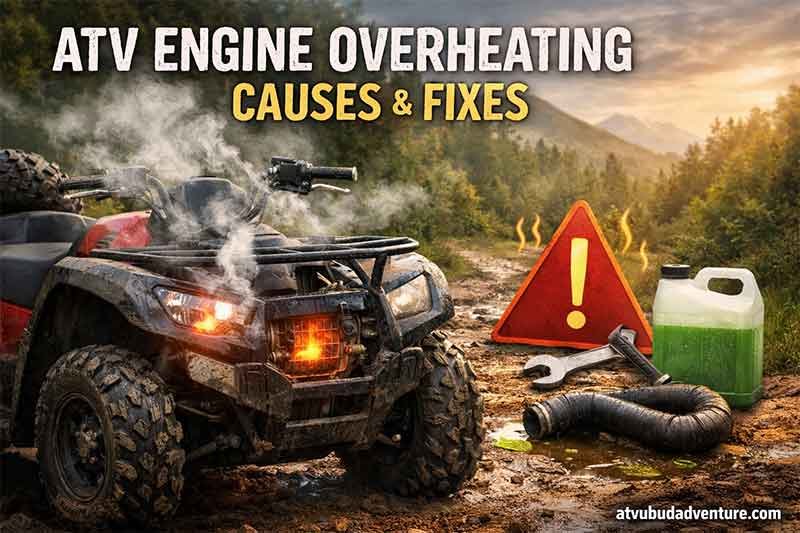
ATV engine overheating is one of the most common problems riders face. It can happen on the trail, in the jungle, or even during a simple weekend ride. If ignored, it may lead to expensive repairs or total engine failure.
In this guide, you’ll learn the real ATV engine overheating causes and fixes. We’ll break it down clearly, with practical tips you can apply right away. Whether you ride for fun or adventure tours, this guide will help you keep your ATV running cool and strong.
What Happens When an ATV Engine Overheats?
An ATV engine works hard. It burns fuel, creates power, and produces heat. Normally, the cooling system controls that heat. But when something goes wrong, temperatures rise quickly.
You may notice:
- Steam from the radiator
- A burning smell
- Loss of power
- Engine knocking sounds
- Warning light on the dashboard
If this happens, stop riding immediately. Continuing to ride an overheating ATV can warp engine components and damage the piston or cylinder head.
To understand overheating better, it helps to know how an ATV engine works. Once you understand the basics, troubleshooting becomes much easier.
Top ATV Engine Overheating Causes
Let’s look at the most common reasons your ATV runs hot.
Low or Leaking Coolant
This is the number one cause.
If your coolant level is low, the engine cannot transfer heat properly. Leaks often happen due to cracked hoses, loose clamps, or a damaged radiator.
Signs include puddles under your ATV or frequent need to refill coolant.
Fix: Check coolant level when the engine is cold. Inspect hoses and connections. Replace damaged parts immediately.
Clogged or Dirty Radiator
ATVs are built for mud, dust, and off-road terrain. But debris can block airflow to the radiator.
If air cannot pass through the radiator fins, heat gets trapped.
This is common after aggressive trail riding or muddy jungle tours like an ATV jungle adventure in Ubud.
Fix: Clean the radiator with low-pressure water. Avoid high pressure because it can bend the fins.
Faulty Cooling Fan
Many modern ATVs use electric cooling fans. If the fan motor fails, the engine temperature rises quickly, especially at low speeds.
Fix: Start your ATV and let it idle. Watch if the fan turns on as temperature increases. If not, check the fuse, wiring, or replace the fan motor.
Thermostat Problems
The thermostat controls coolant flow. If it gets stuck closed, coolant cannot circulate.
This leads to rapid overheating within minutes.
Fix: Replace the thermostat. It’s inexpensive compared to engine repairs.
Riding Style and Heavy Load
Sometimes, the problem isn’t mechanical.
Aggressive riding, constant high RPM, or carrying heavy loads can push the engine beyond its cooling capacity.
Beginners often make riding mistakes that strain the engine. If you’re new, check these common ATV riding mistakes most beginners make.
Fix: Shift properly, avoid excessive revving, and allow cooling breaks during long rides.
Mud Blocking Airflow
Mud packed around the engine and radiator acts like insulation. Heat cannot escape.
This is common during wet-season rides.
Fix: Wash your ATV after every muddy ride. Pay special attention to radiator and engine fins.
ATV Engine Overheating Fixes You Can Do Yourself
Not every overheating issue requires a mechanic. Here are practical steps you can try first.
Step 1: Let It Cool Down
Never open the radiator cap while the engine is hot. Wait at least 20–30 minutes.
Opening it too soon can cause serious burns.
Step 2: Check Coolant Level
Once cool, inspect the reservoir. Top it up with the recommended coolant type. Never use plain water long-term because it can cause corrosion.
Step 3: Inspect for Visible Damage
Look for:
- Coolant leaks
- Cracked hoses
- Loose clamps
- Broken fan wires
Small fixes early prevent major repairs later.
Step 4: Clean the Radiator
Use soft water spray and remove mud or debris.
This simple step alone fixes many overheating cases.
Step 5: Test Ride Carefully
After fixing the issue, take a short ride. Monitor temperature closely.
If overheating continues, consult a professional technician.
How to Prevent ATV Engine Overheating
Prevention is always cheaper than repair.
Regular Maintenance
Change coolant based on manufacturer schedule. Inspect hoses every few months.
Routine maintenance is especially important if you ride frequently or operate tours like an ATV tour in Ubud.
Use the Right Coolant
Always use manufacturer-recommended coolant. Mixing types can reduce cooling efficiency.
Avoid Constant High RPM
Let the engine breathe. Short breaks during long rides help stabilize temperature.
Check Radiator Before Every Ride
It takes less than one minute. But it can save you thousands in engine repairs.
Understand Your ATV Type
Different ATVs handle heat differently. Utility ATVs, sport ATVs, and touring models have different cooling capacities.
If you’re unsure which type you have, read about types of ATV vehicles and their uses.
Is Overheating More Common in Certain Conditions?
Yes.
Hot weather, slow technical trails, heavy mud, and carrying passengers increase overheating risk.
In tropical destinations like Bali, engines work harder due to high humidity and temperature. That’s why professional operators maintain their units daily to avoid breakdowns during tours such as the Ubud ATV jungle and rice field tour.
If your ATV overheats repeatedly, climate and terrain may be contributing factors.
When to See a Mechanic
Seek professional help if:
- Overheating happens repeatedly
- You notice white smoke from exhaust
- Coolant mixes with engine oil
- Engine loses significant power
These signs may indicate blown head gasket or internal engine damage.
Ignoring them can turn a small repair into a full engine rebuild.
Frequently Asked Questions About ATV Engine Overheating
Can I pour water into an overheating ATV?
Only in emergencies. Water works temporarily, but it lacks anti-corrosion and anti-freeze properties. Replace with proper coolant as soon as possible.
How long can an ATV run before overheating?
It depends on the cause. A stuck thermostat can cause overheating within 5–10 minutes. Minor airflow issues may take longer.
Does engine oil affect overheating?
Yes. Low or dirty oil increases friction and heat. Always maintain proper oil levels.
Can overheating damage the piston?
Absolutely. Excessive heat can warp pistons, damage cylinder walls, and destroy seals.
Final Thoughts: Keep Your ATV Running Cool
Understanding ATV engine overheating causes and fixes helps you ride with confidence. Most overheating issues start small. Low coolant, dirty radiator, or riding habits are usually to blame.
With simple checks and regular maintenance, you can prevent serious damage and extend your ATV’s lifespan.
If you want to experience a professionally maintained ATV in Bali’s stunning terrain, visit ATV Ubud Adventure. We offer guided jungle, rice field, and waterfall rides in Ubud, Bali. Our engines are checked daily for safety and performance.
Contact us via phone, SMS, or WhatsApp at +6287877066948 or click the chat button on our website to book your next adventure.
Ride smart. Stay cool. Enjoy the trail.