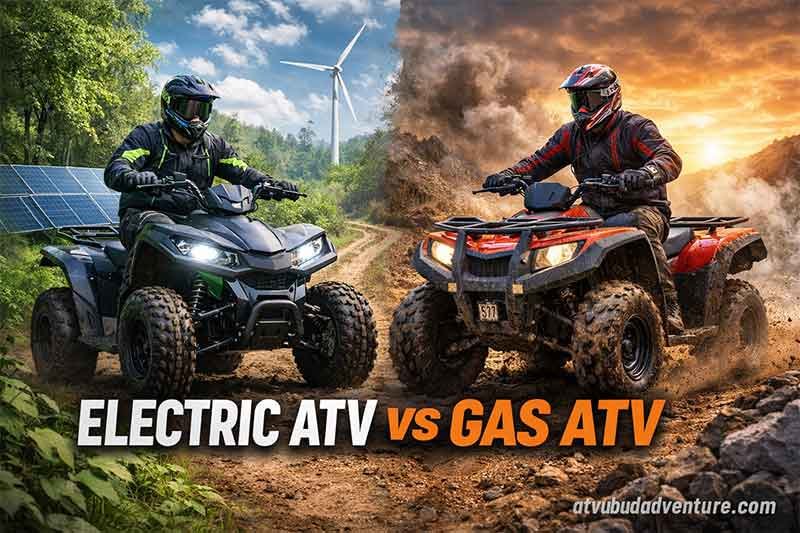
Choosing between electric ATV vs gas ATV isn’t just about the engine. It’s about how you ride, where you ride, and what kind of experience you want.
Some riders want power and long-distance endurance. Others prefer quiet rides and low maintenance. In 2026, both options are better than ever. But they serve different purposes.
Let’s break it down clearly, so you can decide with confidence.
What Is an ATV and Why Engine Type Matters
An ATV (All-Terrain Vehicle) is designed to handle dirt, mud, hills, sand, and uneven trails. If you’re new to this world, here’s a simple explanation of what an ATV really means and how it works.
The engine type affects:
- Power delivery
- Maintenance needs
- Noise level
- Environmental impact
- Long-term cost
So when comparing electric ATV vs gas ATV, you’re really comparing two completely different riding experiences.
Electric ATV vs Gas ATV: Core Differences You Need to Know
Power and Torque
Gas ATVs traditionally deliver stronger sustained power. They perform well on steep climbs, deep mud, and long off-road routes.
Electric ATVs provide instant torque. The acceleration feels smooth and immediate. There’s no gear shifting. Just twist and go.
For aggressive terrain and heavy-duty use, gas still leads in most high-performance models. But for recreational riding, electric feels surprisingly strong.
Speed and Range
Gas ATVs typically offer higher top speeds and longer range. You can refuel in minutes and keep going.
Electric ATVs depend on battery capacity. Most models are ideal for short to medium rides. Once the battery drains, charging can take several hours.
If you plan multi-hour adventures in remote areas, gas is more practical. If you ride locally or on guided trails, electric works perfectly.
Noise Level
Gas engines are loud. Some riders love the engine sound. Others find it disruptive.
Electric ATVs are nearly silent. This makes them ideal for nature trails, farms, and eco-tourism destinations.
In places like Ubud, quieter rides create a more immersive jungle experience.
Maintenance and Reliability
Gas ATVs require regular oil changes, spark plug checks, fuel system care, and cooling system maintenance.
Electric ATVs have fewer moving parts. No oil. No fuel lines. Less mechanical complexity.
If you’ve ever dealt with engine heat problems, you know maintenance matters. Here’s a helpful guide about ATV engine overheating causes and fixes so you understand common gas engine issues.
Electric systems reduce many of these concerns. But battery replacement after several years can be expensive.
Electric ATV vs Gas ATV for Beginners
If you’re new to riding, simplicity is key.
Electric ATVs are beginner-friendly. Smooth throttle response. No shifting gears. Less intimidating overall.
Gas ATVs feel more powerful, which can be overwhelming at first.
Many beginners make simple riding errors that affect safety and control. Before choosing your first ATV, review these common ATV riding mistakes most beginners make.
For families or guided tours, electric ATVs often feel safer and easier to manage.
Cost Comparison: What Will You Actually Spend?
Let’s look at real-world costs.
Electric ATV:
- Higher upfront price
- Minimal fuel cost
- Lower routine maintenance
- Battery replacement after years
Gas ATV:
- Lower initial price
- Ongoing fuel expenses
- Regular servicing costs
- Potential engine repairs
If you ride frequently for short sessions, electric may save money long-term. If you use your ATV heavily for work, gas may provide better overall value.
Environmental Impact: Does It Matter?
Electric ATVs produce zero direct emissions. They’re quieter and cleaner at the point of use.
Gas ATVs emit exhaust fumes and consume fossil fuel.
For eco-tourism areas, electric is increasingly preferred. In natural environments like rice fields and forest trails, lower noise and zero emissions make a noticeable difference.
Real-World Use Case: Work vs Adventure
For farms, construction sites, and long-haul utility work, gas ATVs are still dominant. They handle extended use and heavy loads.
For recreational riding, guided tours, and scenic exploration, electric ATVs are growing in popularity.
Different terrains also require different machines. If you want a deeper breakdown, here’s a useful guide on types of ATV vehicles and their uses.
The key is matching the ATV to your purpose.
How to Choose Between Electric ATV vs Gas ATV
Ask yourself:
How far do I usually ride?
Do I need high top speed?
Is noise a concern?
Am I comfortable maintaining engines?
Do I have easy access to charging?
If you want raw power and long-distance reliability, gas is still king.
If you prefer low maintenance, quiet rides, and modern tech, electric is a strong option.
There’s no universal winner. Only the right fit for your lifestyle.
Experience ATV Riding the Right Way in Bali
Reading comparisons is helpful. But nothing beats real experience.
If you’re visiting Bali and want to feel the thrill of riding through jungle trails, rivers, tunnels, and rice fields, ATV Ubud Adventure offers one of the most exciting guided experiences available.
Explore professionally designed routes through the heart of Ubud. Safe for beginners. Exciting for thrill seekers.
You can check one of the most recommended experiences here:
Best Ubud ATV Tour – Your Ultimate Adventure in Bali
ATV Ubud Adventure
Ubud, Bali
Phone / SMS / WhatsApp: +6287877066948
Or click the chat button on our website to book instantly.
Whether you choose electric ATV vs gas ATV, the real adventure begins when the wheels hit the trail.