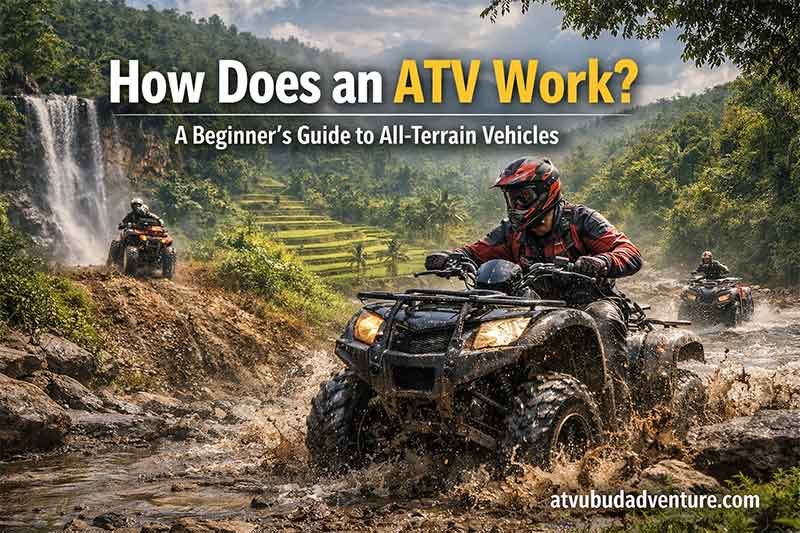
All-terrain vehicles, better known as ATVs, are built for adventure. You see them climbing hills, splashing through mud, and cruising across rough trails with ease. But many riders, especially beginners, still wonder one simple thing. How does an ATV work?
This guide breaks it all down in plain English. No jargon. No confusing tech talk. Just clear explanations, practical examples, and helpful tips so you fully understand how an ATV moves, turns, and handles tough terrain.
What Is an ATV and Why It’s Built Differently
An ATV is a small off-road vehicle designed to handle surfaces where normal vehicles fail. Think dirt, sand, rocks, jungle trails, and rice fields.
Most ATVs have four wheels, a straddle seat like a motorcycle, and handlebars for steering. They are compact but powerful. That design allows riders to shift body weight and stay balanced on uneven ground.
Unlike cars, ATVs are built to flex. The suspension, tires, and frame all work together to adapt to changing terrain. That flexibility is key to how an ATV works in real conditions.
How Does an ATV Work at a Basic Level
At its core, an ATV works by converting engine power into wheel movement while maintaining grip and balance on rough surfaces.
The engine creates power. The transmission controls speed. The drivetrain sends power to the wheels. The suspension absorbs shocks. The tires grip the ground.
Each system plays a role. If one fails, performance drops fast. When all work together, the ATV feels stable, responsive, and fun to ride.
ATV Engine Explained in Simple Terms
Most ATVs use either a single-cylinder or twin-cylinder engine. Smaller engines are common for beginners. Larger engines deliver more torque for climbing and mud riding.
ATV engines are usually four-stroke. That means fuel goes through four stages: intake, compression, combustion, and exhaust. This design is reliable and fuel-efficient.
The engine produces torque, not just speed. Torque is what helps an ATV pull through thick mud or climb steep hills without stalling.
Fuel System and Throttle Control
Fuel reaches the engine through either a carburetor or fuel injection system. Older ATVs often use carburetors. Newer models rely on fuel injection for smoother performance.
When you press the throttle with your thumb, more fuel and air enter the engine. That creates more power and increases speed.
This direct control is why ATVs feel responsive. Small throttle changes can make a big difference, especially on trails.
Transmission and Gear System
Understanding the transmission helps answer how does an ATV work in different riding conditions.
Most ATVs use automatic or semi-automatic transmissions. You do not need to manually shift gears like on a motorcycle.
Common gear settings include park, reverse, neutral, drive, and low gear. Low gear is crucial for steep climbs and technical trails.
The transmission adjusts engine output so the wheels turn at the right speed without stalling or spinning out.
Drivetrain and Power Distribution
The drivetrain transfers power from the engine to the wheels. Many ATVs offer two-wheel drive and four-wheel drive modes.
In two-wheel drive, power goes to the rear wheels. This is ideal for flat or dry trails.
In four-wheel drive, power reaches all wheels. This provides better traction on mud, sand, or rocky paths. Some advanced ATVs even have differential locks for extreme conditions.
This flexibility is a major reason ATVs perform so well off-road.
Suspension System and Shock Absorption
Suspension is what keeps you comfortable and in control.
ATVs use independent suspension on most models. Each wheel moves separately to absorb bumps.
Shock absorbers compress and rebound as you ride over obstacles. This reduces impact on your body and keeps the tires in contact with the ground.
Good suspension improves stability, especially when riding fast or navigating uneven jungle trails like those found in Ubud.
Tires and Traction on Different Terrain
ATV tires are wide and low-pressure. This increases surface contact and grip.
Different tread patterns are designed for mud, sand, or hard-packed dirt. Deep treads dig into soft surfaces. Flatter treads work better on dry trails.
Proper tire pressure matters. Lower pressure improves grip but reduces speed. Higher pressure increases speed but lowers traction.
Steering, Brakes, and Rider Control
Steering an ATV uses handlebars, but body movement plays a big role.
Leaning into turns helps maintain balance. Shifting weight forward improves climbing. Leaning back helps during descents.
Brakes are usually hand-operated. Front and rear brakes may be linked or independent depending on the model.
Learning proper control techniques is essential for safety and enjoyment.
How Does an ATV Work on Hills, Mud, and Water
On hills, low gear and steady throttle prevent stalling. Weight distribution keeps the ATV balanced.
In mud, momentum matters. Four-wheel drive and consistent throttle help avoid getting stuck.
When crossing shallow water, sealed components protect the engine and transmission. Still, controlled speed is key to prevent splashing into the air intake.
These abilities make ATVs perfect for varied landscapes, including jungle, rivers, and rice fields.
Safety Features You Should Know About
Modern ATVs include several safety features.
Engine cut-off switches stop the engine if the rider falls. Speed limiters help beginners learn safely. Hand guards protect fingers from branches.
Wearing a helmet, boots, and protective gear is always recommended, even on guided tours.
Real-World Example of ATV Riding in Ubud
Many first-time riders experience ATVs on guided tours. Trails often combine jungle paths, river crossings, tunnels, and rice fields.
Routes like the ones offered in an ATV tour in Ubud are designed to showcase how an ATV works in real conditions.
You feel how torque pulls you uphill. You notice how suspension absorbs bumps. You learn how steering responds instantly.
For beginners, this hands-on experience explains more than any manual.
Beginner Tips to Understand How an ATV Works Faster
Start slow. Learn throttle control before chasing speed.
Use low gear when unsure. It gives better control and torque.
Listen to the engine. Sound changes tell you when it’s working hard.
Follow experienced guides, especially on technical trails like jungle routes or waterfalls such as the ATV Ubud waterfall adventure.
Why ATVs Are Ideal for Adventure Tourism
ATVs are simple to learn but exciting to master. They work well for all skill levels.
Their design allows safe exploration of remote areas without needing advanced riding skills.
That’s why ATV experiences near rice fields, forests, and rivers remain popular, including rides through scenic areas like the ATV Ubud rice field.
Common Misconceptions About How ATVs Work
Many think ATVs are hard to control. In reality, automatic transmissions make them beginner-friendly.
Some assume they are unsafe. Most accidents happen due to overconfidence, not machine failure.
Others believe ATVs damage nature. Responsible tour operators use designated trails and follow environmental rules.
Final Thoughts on How Does an ATV Work
Understanding how does an ATV work helps you ride smarter and safer. From engine to tires, every system is built to handle rough terrain while keeping the rider in control.
Whether you’re a beginner or just curious, knowing the basics makes the experience more enjoyable.
If you want to experience ATVs in a real-world setting, explore jungle trails, rivers, and rice fields with ATV Ubud Adventure. We offer guided ATV tours in Ubud, Bali with professional instructors and well-maintained quad bikes.
Visit ATV Ubud Adventure for more details. For booking and information, contact phone, SMS, or WhatsApp at +6287877066948 or simply click the chat button on our website.