
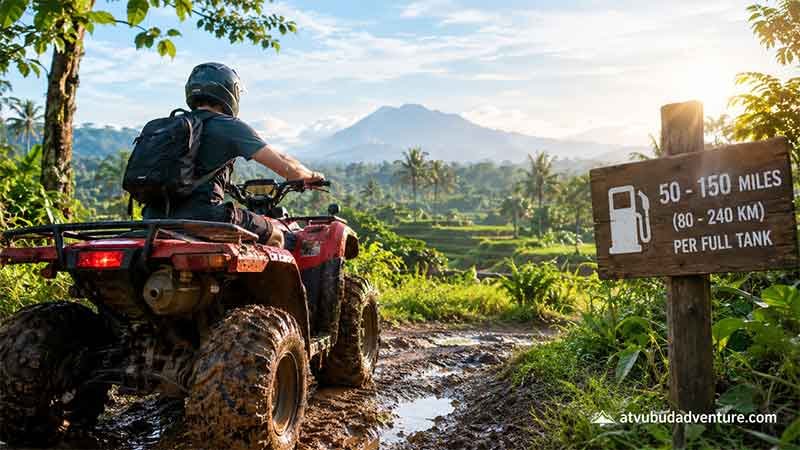
How Far Can an ATV Travel? – An ATV can typically travel around 50 to 150 miles (80 to 240 kilometers) on a full tank, depending on its engine size, fuel capacity, terrain, riding style, and mechanical condition. Some fuel-efficient models can travel farther, while powerful ATVs riding through deep mud or steep trails may need refueling much sooner.
If you are planning an off-road adventure, understanding your ATV’s range helps you estimate fuel needs, avoid unexpected stops, and choose suitable routes. Here is what determines how far an ATV can travel and how to get the most distance from every tank.
How Far Can an ATV Travel on a Full Tank?
Most recreational ATVs can cover approximately 50 to 150 miles per tank under typical riding conditions. However, this is a general estimate rather than a guaranteed distance. Actual range varies considerably between models.
For example, a small recreational ATV used on relatively flat trails may consume less fuel than a large sport or utility ATV climbing hills and crossing muddy terrain.
The following estimates provide a practical starting point.
| ATV Type | Approximate Range per Tank |
|---|---|
| Small ATV, 50cc–125cc | 30–80 miles |
| Mid-size ATV, 200cc–350cc | 50–120 miles |
| Large ATV, 400cc–700cc | 60–150 miles |
| High-performance ATV, 700cc and above | 50–150+ miles |
These figures are illustrative estimates, not manufacturer specifications. Some models fall outside these ranges, depending on their fuel tanks, engine designs, and operating conditions.
Before planning a long trip, check your owner’s manual for fuel capacity and expected consumption. Your first few rides can also help you establish a more realistic range for your particular ATV.
What Factors Affect How Far an ATV Can Travel?
Several factors determine how much distance you can cover before refueling.
1. Fuel Tank Capacity
Fuel capacity is one of the most important factors affecting ATV range. A larger tank generally allows an ATV to travel farther, provided its fuel consumption remains similar.
For instance, an ATV with a 4-gallon tank that averages 25 miles per gallon could theoretically cover 100 miles. In practice, you should plan for a shorter distance because fuel consumption changes with terrain, load, and throttle input.
Learn more about how long an ATV can ride on a full tank to understand the relationship between fuel capacity and riding time.
2. Engine Size and Fuel Consumption
Engine displacement, measured in cubic centimeters (cc), influences how an ATV performs and consumes fuel. Larger engines can deliver more power, but they may also burn more gasoline when ridden aggressively.
However, engine size alone does not determine range. Engine efficiency, transmission design, vehicle weight, and riding conditions also matter.
If you are comparing different engine sizes, our guide to 250cc vs. 350cc ATVs explains the main differences between these popular options.
3. Terrain and Trail Conditions
Terrain can significantly reduce the distance an ATV travels on a tank of fuel.
Riding on smooth, relatively flat ground generally requires less effort than navigating steep hills, loose sand, rocky trails, or deep mud. Muddy terrain creates additional resistance, forcing the engine to work harder to keep the ATV moving.
This is particularly important for off-road adventures in tropical destinations. Wet trails, slippery surfaces, and uneven ground can increase fuel consumption compared with ordinary trail riding.
4. Riding Style and Speed
Frequent acceleration, high engine speeds, and aggressive throttle use can increase fuel consumption. A rider who maintains a controlled pace will often achieve better fuel economy than someone who constantly accelerates and brakes.
Riding speed also affects how far you can travel in a given amount of time. However, faster riding does not necessarily mean better efficiency or greater overall range.
For a clearer comparison, see our guide on how fast an ATV can go.
5. Passenger and Cargo Weight
Carrying a passenger, heavy equipment, or additional cargo increases the load on the engine. The extra weight can affect acceleration, climbing ability, and fuel consumption.
If you regularly ride with another person, account for the additional load when estimating your range. Always follow the manufacturer’s passenger and weight limits.
How Can You Calculate Your ATV’s Travel Range?
You can estimate your ATV’s range using a simple calculation:
ATV range = Fuel tank capacity × Average fuel economy
For example, suppose your ATV has a 4-gallon fuel tank and averages 25 miles per gallon.
4 gallons × 25 miles per gallon = 100 miles.
That gives you a theoretical range of 100 miles. However, it is safer to plan a shorter route because real-world conditions rarely remain constant.
If your route includes steep climbs, deep mud, or long stretches without fuel stations, leave a larger fuel reserve. Never assume that the advertised maximum range is achievable on every trip.
How to Make Your ATV Travel Farther on One Tank
A few practical habits can help improve fuel efficiency and reduce the risk of running out of fuel.
Maintain a Steady Riding Pace
Avoid unnecessary acceleration and excessive engine speeds. Use a controlled pace that suits the terrain and your experience level.
Keep Your ATV Properly Maintained
Dirty air filters, worn spark plugs, incorrect tire pressure, and engine problems can affect performance and fuel consumption. Follow the recommended maintenance schedule and address mechanical issues before a long ride.
Check Tire Pressure
Underinflated tires can increase rolling resistance and make the engine work harder. Use the tire pressure recommended by the manufacturer rather than guessing or automatically choosing a higher pressure.
Plan Your Route Before Leaving
Identify fuel stops, estimate the distance between them, and consider the terrain. Carry only equipment that you need, and bring emergency supplies appropriate for the trip.
For remote trails, turn back before your remaining fuel becomes too low to return safely.
Is It Safe to Ride an ATV Until the Fuel Tank Is Empty?
No. Running an ATV completely out of fuel is not a good travel strategy, especially on remote trails.
You could become stranded far from assistance, and pushing or towing an ATV across difficult terrain may be dangerous. Fuel availability can also be unpredictable in rural areas.
A sensible approach is to plan refueling before your reserve becomes critical. The exact reserve depends on your ATV, route, and access to fuel, so use conservative estimates rather than relying on a universal percentage.
How Far Can You Travel on an ATV Tour in Bali?
ATV tours in Bali are usually designed around a planned off-road route rather than the maximum distance the vehicle can travel on a full tank.
In Ubud, riders may encounter muddy tracks, jungle paths, rice fields, tunnels, and other off-road features, depending on the operator and selected route. These conditions make the experience different from covering long distances on open roads.
For most visitors, the quality of the trail, safety guidance, and overall experience matter more than maximizing mileage. Beginners can also enjoy guided rides without needing to plan fuel stops or navigate unfamiliar trails independently.
If you are visiting Bali, explore ATV Ubud Adventure to learn about available riding experiences and choose a tour that suits your interests.
Final Thoughts
So, how far can an ATV travel? Many recreational models can cover approximately 50 to 150 miles on a full tank, but the actual distance depends on fuel capacity, engine efficiency, terrain, riding style, and vehicle condition.
The best way to estimate your ATV’s range is to monitor its real-world fuel consumption, maintain the vehicle properly, and plan every trip with a safety reserve. A little preparation can make the difference between an enjoyable off-road adventure and an avoidable breakdown.
Ready for an ATV adventure in Bali?
ATV Ubud Adventure offers guided ATV tour experiences in Ubud, Bali. Contact the team by phone, SMS, or WhatsApp at +62 878-7706-6948, or visit ATV Ubud Adventure to explore tour options and book your ride. You can also click the chat button on the website to ask about available packages.