
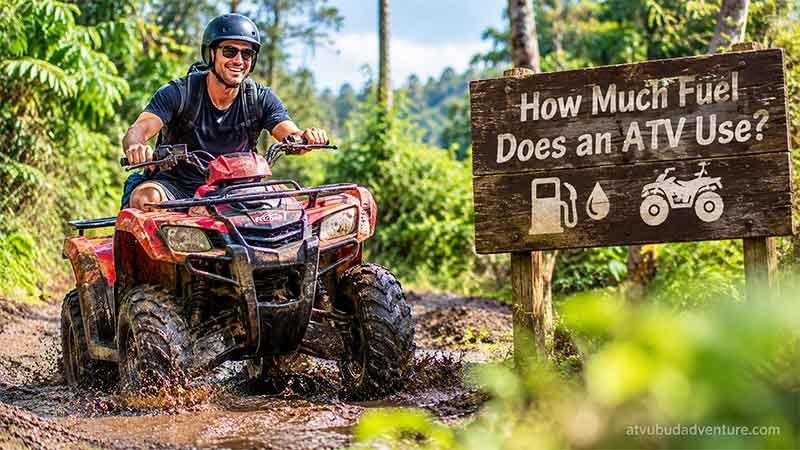
An ATV typically uses around 1–3 gallons of gasoline per hour during recreational riding, although actual consumption varies by engine size, terrain, riding style, and vehicle condition. Smaller ATVs may consume less fuel, while powerful models working through deep mud or steep trails can use considerably more.
If you are planning a long trail ride, comparing different engine sizes, or simply trying to estimate your fuel budget, understanding ATV fuel consumption can help you prepare. The key is to consider how and where you ride rather than relying on engine size alone.
How Many Miles Per Gallon Does an ATV Get?
ATV fuel economy varies widely. Some smaller recreational models may achieve around 20–35 miles per gallon under favorable conditions, while larger or more demanding off-road machines can deliver lower mileage.
These figures are general estimates, not guaranteed specifications. Your actual results depend on the manufacturer’s design, engine condition, terrain, and throttle use.
Estimated ATV Fuel Consumption by Engine Size
| ATV Engine Size | Approximate Fuel Use per Hour |
|---|---|
| 90–125cc | 0.2–0.6 gallons |
| 150–250cc | 0.3–1 gallon |
| 300–400cc | 0.5–1.5 gallons |
| 450–700cc | 0.8–2 gallons |
| 700cc and above | 1–3+ gallons |
These ranges are illustrative estimates for recreational riding, not official figures for every ATV model. Heavy mud, steep climbs, high speeds, and sustained engine loads can increase fuel consumption significantly.
For a closer comparison between common recreational models, see our guide to 250cc vs. 350cc ATVs.
What Factors Affect ATV Fuel Consumption?
Two riders using similar ATVs can experience very different fuel consumption. Here are the main reasons.
1. Engine Size and Power
Larger engines generally consume more fuel when producing higher levels of power. A 350cc ATV may use more gasoline than a 150cc model when both operate under comparable conditions.
However, engine size does not tell the whole story. Engine design, fuel injection, transmission type, and mechanical condition also influence efficiency.
2. Terrain and Riding Conditions
Terrain has a major effect on how much fuel an ATV uses.
Riding on flat, firm ground usually requires less engine effort than navigating steep hills, loose sand, rocky paths, or deep mud. When the tires repeatedly lose traction, the engine may need more power to keep the ATV moving.
This is particularly relevant for muddy off-road trails. Read our guide to the terrain used for ATV Ubud tours to understand how different trail conditions affect an off-road experience.
3. Riding Style
Frequent acceleration, high engine speeds, and aggressive throttle inputs can increase fuel consumption.
A rider who maintains a steady pace on suitable terrain will often use less fuel than someone who constantly accelerates and brakes. Smooth throttle control also makes the ride easier to manage.
4. Vehicle Maintenance
A poorly maintained ATV may consume more fuel than necessary. Dirty air filters, worn spark plugs, incorrect tire pressure, and fuel system problems can affect engine performance.
Regular inspections help keep the engine operating properly. Follow an ATV maintenance checklist for beginners to identify common maintenance tasks before your next ride.
How Much Fuel Does an ATV Use on a Full Tank?
The answer depends on tank capacity and the vehicle’s actual fuel consumption.
For example, imagine an ATV has a 3-gallon tank and consumes 1 gallon per hour. Under those conditions, the theoretical running time would be approximately three hours.
In practice, the engine may use more fuel as the terrain becomes difficult. It is also wise to keep a reserve rather than planning to use every drop in the tank.
How to Estimate ATV Riding Range
You can estimate your ATV’s range using a simple calculation:
Estimated range = Fuel tank capacity × Fuel economy
For example, if an ATV holds 3 gallons and averages 25 miles per gallon, its theoretical range is 75 miles.
Actual range may be shorter during demanding off-road riding. Always use your owner’s manual for the official tank capacity and follow the manufacturer’s recommendations for refueling and safe operation.
For more details, read our guide on how long an ATV can ride on a full tank.
How Much Does It Cost to Fuel an ATV?
Fuel costs depend on the local gasoline price and how much fuel your ATV consumes.
Suppose your ATV uses 1 gallon per hour and you ride for two hours. You would need approximately 2 gallons of fuel under those conditions.
Multiply that amount by the price per gallon to estimate your fuel expense. If you live in a country that sells gasoline by the liter, convert the tank capacity and consumption figures to liters before calculating the cost.
Remember that fuel is only one part of the total cost of owning an ATV. Maintenance, tires, engine oil, repairs, and storage can also contribute to your long-term expenses.
How Can You Reduce ATV Fuel Consumption?
You do not need to sacrifice the enjoyment of off-road riding to use fuel more efficiently.
Try these practical tips:
- Maintain a steady speed: Avoid unnecessary acceleration and sudden throttle changes.
- Check tire pressure: Use the pressure recommended by the manufacturer for your tires and riding conditions.
- Clean the air filter: A properly maintained air intake helps the engine operate as intended.
- Service the engine regularly: Inspect the spark plugs, fuel system, and other components according to the service schedule.
- Choose suitable routes: Extremely challenging terrain can increase fuel consumption.
- Avoid unnecessary idling: Switch off the engine when appropriate and safe to do so.
If your ATV suddenly starts using much more fuel than usual, check for maintenance issues instead of assuming that the change is normal.
Does an ATV Use More Fuel on Muddy Trails?
Yes, it often does. Mud creates additional resistance, and the tires may need to work harder to maintain traction. Steep slopes, waterlogged ground, and repeated acceleration can increase the engine’s workload.
However, fuel consumption varies with mud depth, tire design, vehicle weight, and rider technique. Not every muddy trail produces the same results.
For riders planning an off-road holiday, choosing an appropriate ATV and following the guide’s instructions can make the experience more manageable.
Final Thoughts: How Much Fuel Does an ATV Use?
Most recreational ATVs can use roughly 1–3 gallons of fuel per hour, but smaller models may consume less and demanding riding conditions can push consumption higher. Engine size, terrain, riding style, maintenance, and tank capacity all influence how far an ATV can travel on a given amount of gasoline.
The best way to estimate your ATV’s fuel needs is to start with the manufacturer’s specifications and adjust your expectations for real-world riding conditions. If you are planning a long trip, allow extra fuel rather than relying entirely on theoretical mileage.
Explore ATV Adventures in Ubud, Bali
ATV Ubud Adventure offers quad biking experiences in Ubud, Bali, for travelers looking to explore the area’s off-road trails. Whether you are interested in muddy tracks, jungle scenery, or a guided ATV adventure, contact the team to learn about available packages.
Website: ATV Ubud Adventure
Phone, SMS, or WhatsApp: +6287877066948
You can contact the team directly to ask about tour options, schedules, and booking details.