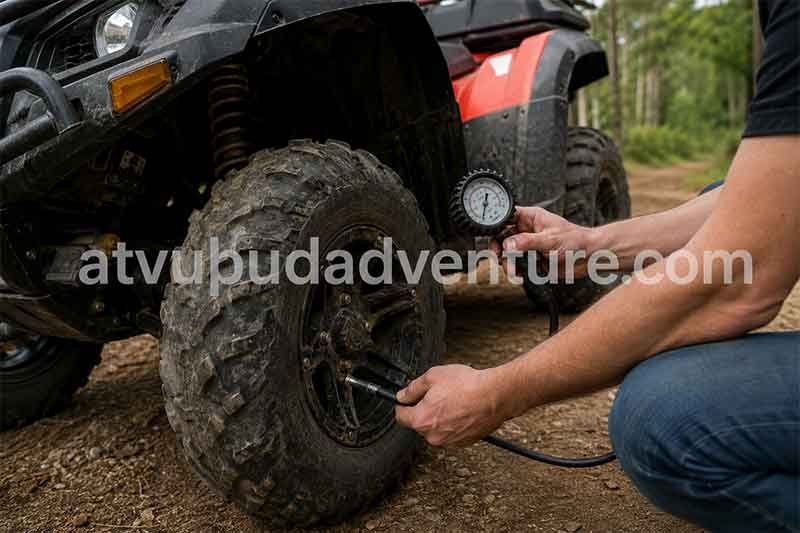
Many ATV owners focus on engine maintenance, oil changes, and accessories, but overlook one of the most important factors affecting performance: tire pressure.
The right tire pressure can improve traction, comfort, handling, fuel efficiency, and tire lifespan. On the other hand, incorrect pressure can make riding difficult, reduce control, and increase the risk of damage.
Whether you use your ATV for trail riding, mud adventures, hunting, farming, or recreation, understanding proper tire pressure can make a significant difference.
In this ATV tire pressure guide, you’ll learn how to choose the right PSI, adjust it for different terrains, and avoid common mistakes that many riders make.
Why ATV Tire Pressure Matters
ATV tires are designed differently from car tires. They operate at much lower pressures and rely on a larger contact patch to maintain traction on uneven terrain.
When tire pressure is properly adjusted, your ATV can:
- Improve grip on dirt, mud, sand, and rocks
- Deliver smoother rides over rough surfaces
- Reduce tire wear
- Enhance steering response
- Improve overall safety
If you’re new to ATV riding, you may also want to read our guide on common ATV riding mistakes most beginners make to build safer riding habits.
What Is the Recommended ATV Tire Pressure?
Most ATV manufacturers recommend tire pressures ranging between 3 PSI and 10 PSI.
However, there is no universal number that works for every ATV model.
The ideal pressure depends on:
- ATV type
- Tire size
- Rider weight
- Cargo load
- Terrain conditions
- Riding style
Always start by checking the tire sidewall and your owner’s manual for manufacturer recommendations.
Here is a general guideline:
Recreational Trail Riding
For typical trail riding, many riders prefer:
- Front tires: 5–7 PSI
- Rear tires: 5–7 PSI
This provides a good balance between comfort, traction, and handling.
Mud Riding
Mud requires maximum tire footprint and grip.
Many experienced riders lower pressure to:
- Front tires: 3–5 PSI
- Rear tires: 3–5 PSI
Lower pressure helps tires flex and maintain contact with slippery surfaces.
After muddy adventures, proper cleaning is important. Check out our guide on how to clean an ATV after mud riding.
Sand Riding
Soft sand benefits from lower pressure because it allows tires to float rather than dig.
Recommended range:
- 2.5–5 PSI
Never go too low unless your wheels and tires are designed for extreme low-pressure applications.
Heavy Loads and Utility Work
For farming, hauling, or towing, slightly higher pressure often works better.
Typical range:
- 6–10 PSI
Higher pressure helps support additional weight and reduces sidewall flex.
Signs Your ATV Tires Are Underinflated
Underinflated tires may feel comfortable at first, but they create several problems.
Common signs include:
- Sluggish steering
- Excessive tire flex
- Reduced fuel efficiency
- Increased tire wear on the outer edges
- Difficulty maintaining speed
- Higher risk of tire damage
When pressure becomes extremely low, the tire may even separate from the rim during aggressive cornering.
Signs Your ATV Tires Are Overinflated
Too much pressure can be just as problematic.
Watch for:
- Harsh ride quality
- Reduced traction
- Increased bouncing on rough trails
- Faster center tread wear
- Poor control on uneven terrain
Overinflated tires have a smaller contact patch, which limits grip when riding off-road.
How to Check ATV Tire Pressure Correctly
Checking tire pressure is simple but should be done regularly.
Follow these steps:
Use a Low-Pressure Tire Gauge
Standard automotive gauges are often inaccurate at low PSI levels.
Invest in a quality gauge specifically designed for ATV tires.
Check Tires When Cold
Measure pressure before riding.
Heat generated during riding increases pressure and can produce inaccurate readings.
Check All Four Tires
Do not assume all tires lose air equally.
Even a small difference between tires can affect handling.
Inspect for Damage
While checking pressure, inspect tires for:
- Cracks
- Cuts
- Punctures
- Uneven tread wear
Regular inspections are part of good ATV maintenance. Our detailed ATV maintenance checklist for beginners covers other essential checks.
ATV Tire Pressure for Different Terrain Types
Hard-Packed Dirt
Hard surfaces usually benefit from slightly higher pressure.
Recommended range:
- 5–8 PSI
This improves stability and steering precision.
Rocky Trails
Rocky terrain requires a balance between protection and traction.
Recommended range:
- 4–6 PSI
Too much pressure can increase impacts from rocks.
Wet Grass and Slippery Ground
Lower pressure improves grip.
Recommended range:
- 3–5 PSI
This helps prevent wheel spin and improves control.
Snow Conditions
Snow riding often benefits from lower pressures similar to sand riding.
Recommended range:
- 2.5–5 PSI
This increases flotation and traction.
Common ATV Tire Pressure Mistakes
Many riders unknowingly reduce ATV performance through simple mistakes.
Ignoring Seasonal Temperature Changes
Air expands and contracts with temperature.
A tire inflated correctly during summer may lose noticeable pressure during colder months.
Check pressure regularly throughout the year.
Following Car Tire Recommendations
ATVs use dramatically lower pressures than passenger vehicles.
Never inflate ATV tires according to automotive standards.
Using the Maximum Sidewall PSI
The number printed on the tire sidewall is often the maximum allowable pressure, not the recommended operating pressure.
Always verify manufacturer specifications.
Not Adjusting for Terrain
One pressure setting rarely works perfectly for every riding condition.
Experienced riders often make small adjustments depending on where they ride.
Does Tire Pressure Affect ATV Speed?
Yes.
Higher pressure generally reduces rolling resistance, which may slightly improve top speed on smooth surfaces.
However, maximum speed isn’t always the goal.
Proper traction and control are usually more important than gaining a few extra miles per hour. If you’re curious about ATV performance, read our guide on how fast an ATV can go.
How Often Should You Check ATV Tire Pressure?
For best results:
- Check before every ride
- Recheck after major temperature changes
- Inspect monthly during storage
- Verify pressure after transporting the ATV
A quick two-minute inspection can prevent costly tire damage and improve safety.
Final Thoughts
Proper tire pressure is one of the easiest and most effective ways to improve ATV performance. The right PSI helps maximize traction, increase comfort, reduce tire wear, and enhance rider confidence.
While manufacturer recommendations provide a good starting point, don’t be afraid to make small adjustments based on terrain and riding conditions. Regular pressure checks can significantly extend tire life and make every ride more enjoyable.
Whether you’re exploring trails, tackling muddy tracks, or using your ATV for utility work, understanding tire pressure is an essential part of responsible ATV ownership.
Looking for the ultimate ATV adventure in Bali? Visit ATV Ubud Adventure, a trusted ATV tour operator in Ubud, Bali. Experience exciting jungle tracks, muddy trails, tunnels, rivers, and breathtaking landscapes with professional guides.
Website: https://atvubudadventure.com
Phone / SMS / WhatsApp: +6287877066948
Or simply click the chat button on our website to book your adventure today.