
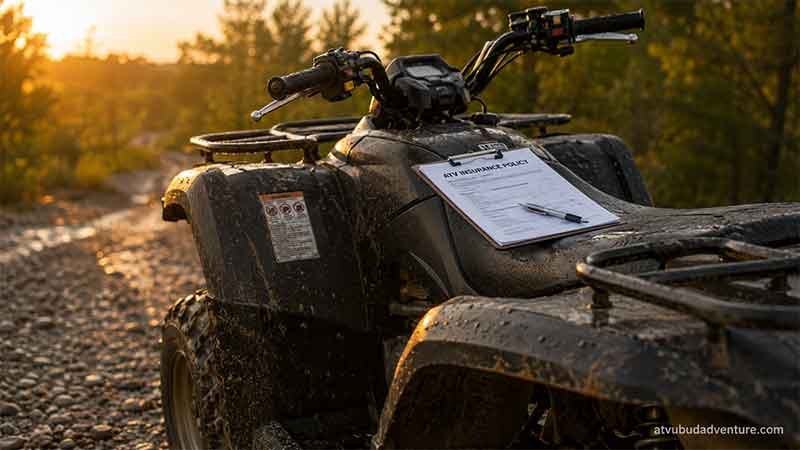
If you just got a quote for ATV insurance and your jaw dropped, you’re not alone. Some riders pay less than a tank of gas a month. Others get quoted three times that for what looks like the same machine. The gap almost always comes down to a handful of factors insurers quietly weigh behind the scenes.
Let’s break down what actually shows up on your bill, why it varies so much, and what you can do about it.
The Short Answer: What ATV Insurance Typically Costs
Most riders pay somewhere between $75 and $300 a year for a basic liability-only policy. Add collision and comprehensive coverage, and that range climbs to roughly $200 to $600 annually, sometimes higher for high-performance or sport models.
These are ballpark figures, not quotes. Your actual premium depends on your state, your ATV, your riding habits, and your history behind the handlebars. Think of these numbers as a starting point for comparison shopping, not a promise.
What Actually Determines Your ATV Insurance Premium
Where You Live
Insurance is regulated state by state, and ATV laws vary just as much. States with more off-road trails and higher accident rates tend to carry higher average premiums. Rural areas with lower theft rates often see slightly better pricing than urban zones.
How You Use Your ATV
A machine that stays on your own property for light recreational use is a very different risk than one hauled to trailheads every weekend or used for farm work. Insurers ask about usage because frequency and terrain both affect claim likelihood.
Your ATV’s Value, Age, and Type
A brand-new, high-horsepower sport ATV costs more to insure than an older utility model. Part of this comes down to replacement cost, but part of it is mechanical too. The difference between 2WD and 4WD ATVs can influence how insurers assess stability and rollover risk, which sometimes shows up in premium calculations for higher-powered models.
Your Riding History
Just like car insurance, a clean record helps. Prior claims, accidents, or tickets for reckless off-road use will push your premium up. First-time ATV owners with a clean driving record generally land closer to the lower end of the range.
Liability-Only vs Full Coverage: What’s the Difference
Liability-only insurance covers damage or injury you cause to someone else. It’s the cheapest option and, in some states, the legal minimum if you ride on public land.
Full coverage adds collision (damage to your own ATV from an accident) and comprehensive (theft, fire, weather damage). It costs more, but if you financed the ATV or ride somewhere theft-prone, it’s usually worth the extra premium.
Do You Even Need ATV Insurance?
It depends entirely on where you live and where you ride. Some states require at least liability coverage for any ATV used on public trails or roads. Others leave it optional, though most rental agreements and organized rides will still ask for proof of coverage.
Even where it isn’t legally required, an uninsured accident involving another rider or their property can get expensive fast. A basic policy is cheap insurance against a very costly afternoon.
Real Ways to Lower Your ATV Insurance Bill
A few habits genuinely move the needle on price. Taking a certified ATV safety course often unlocks a discount, since insurers see trained riders as lower risk. Bundling your ATV policy with your auto or home insurance is another easy win most people skip simply because they never ask.
Storage matters more than people expect too. A locked garage or shed usually earns a better rate than street or open-yard parking, since theft claims drop sharply with secure storage.
Regular maintenance plays a quieter role as well. A well-kept machine is less likely to fail mid-ride and cause an accident, and insurers do occasionally ask about maintenance history after a claim. Staying on top of a basic ATV maintenance checklist and knowing the early signs your ATV needs new brakes isn’t just good practice for the machine, it protects your claims record too. The same goes for running the right rubber for your terrain rather than whatever came stock; choosing tires suited to mud, sand, or rocky trails reduces the odds of a slide-out that turns into a claim.
What About Renting or Riding on a Guided Tour?
Here’s the part most insurance guides skip. If you’re not a full-time ATV owner and you’re just riding for a day, none of this applies to you the way it does to a personal owner shopping for an annual policy.
Guided tours and rental outfits almost always fold liability coverage into the price of the ride, so you’re not expected to carry your own policy for a two-hour excursion. That’s true whether you’re riding trails back home or trying it for the first time on vacation, like on a guided ATV route through Ubud’s rice terraces and jungle trails.
Frequently Asked Questions
Is ATV insurance required by law? In some states, yes, especially if you ride on public roads or trails. Check your state’s specific off-road vehicle statutes.
Does homeowner’s insurance cover my ATV? Rarely, and even when it does, coverage is usually limited to on-property use only.
Can I insure a used ATV? Yes, most insurers price used ATVs based on current market value rather than original purchase price.
If you’re planning a Bali trip and want the ATV experience without the insurance paperwork, ATV Ubud Adventure runs guided rides through Ubud’s jungle and rice-field trails with everything, including safety gear and coverage, taken care of for you. You can call, SMS, or WhatsApp +6287877066948, or click the chat button on the site to book.