
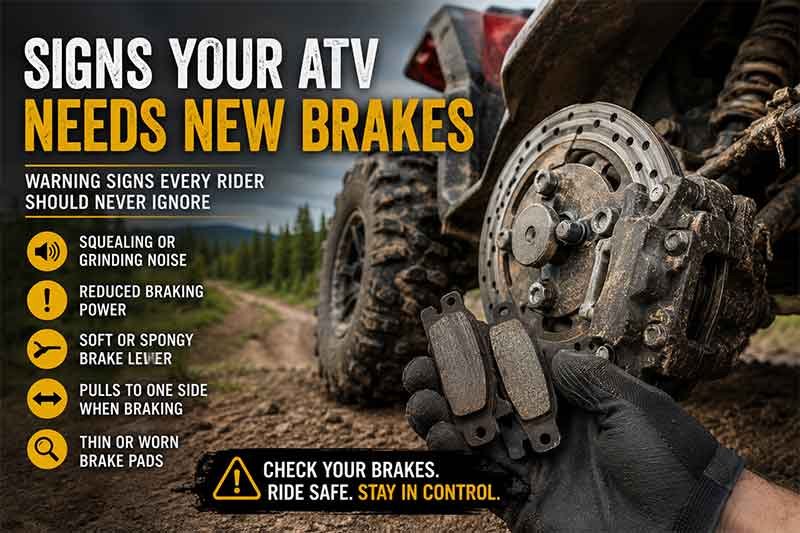
Signs Your ATV Needs New Brakes – Your ATV is built to handle rough trails, muddy terrain, steep hills, and challenging conditions. But no matter how powerful the engine is, none of that matters if your brakes aren’t working properly.
Knowing the signs your ATV needs new brakes can help prevent accidents, reduce repair costs, and keep your rides safe. Brake components wear down over time, especially if you frequently ride through mud, water, sand, or mountainous terrain.
This guide explains the most common warning signs, what causes brake wear, how to inspect your ATV’s braking system, and when it’s time to replace your brake pads or other brake components.
Why Healthy ATV Brakes Matter
Unlike motorcycles or passenger vehicles, ATVs often operate on loose surfaces where stopping distances are naturally longer. Effective brakes are essential for:
- Maintaining control on steep hills
- Avoiding obstacles on trails
- Safely carrying cargo
- Riding with passengers
- Preventing crashes on slippery surfaces
Ignoring brake problems can turn a small maintenance issue into a dangerous situation.
How ATV Brakes Work
Most modern ATVs use hydraulic disc brakes.
The system generally includes:
- Brake lever or brake pedal
- Master cylinder
- Brake fluid
- Hydraulic brake lines
- Brake caliper
- Brake pads
- Brake rotor (disc)
When you squeeze the brake lever or press the brake pedal, hydraulic pressure forces the brake pads against the rotor, slowing the wheels.
Over time, friction naturally wears the brake pads until replacement becomes necessary.
Signs Your ATV Needs New Brakes
Here are the most common warning signs.
1. Squealing or Screeching Noise
One of the earliest signs is a high-pitched squealing sound when braking.
Possible causes include:
- Worn brake pads
- Glazed brake pads
- Dirt or debris between the pad and rotor
- Moisture after riding through water
If the squealing continues after cleaning the brakes, inspect the brake pads immediately.
2. Grinding Noise
Grinding is much more serious than squealing.
It usually means the brake pad friction material has completely worn away, allowing the metal backing plate to contact the brake rotor.
Continuing to ride in this condition may damage:
- Brake rotor
- Brake caliper
- Pistons
Rotor replacement is significantly more expensive than replacing brake pads.
3. Reduced Braking Power
Does your ATV take longer to stop than it used to?
Reduced stopping performance may indicate:
- Worn brake pads
- Contaminated brake pads
- Air in hydraulic lines
- Low brake fluid
- Damaged brake rotor
Never ignore increased stopping distance.
4. Soft or Spongy Brake Lever
A brake lever should feel firm.
If it feels soft or spongy, possible causes include:
- Air inside the hydraulic system
- Old brake fluid
- Brake fluid leak
- Internal master cylinder problems
Although worn brake pads alone don’t always create a spongy feel, this symptom should always be investigated.
5. Brake Pedal Travels Too Far
If you need to push the brake pedal much farther than normal before braking starts, inspect the braking system.
Possible issues include:
- Excessively worn brake pads
- Air in the brake system
- Low brake fluid
- Hydraulic problems
6. ATV Pulls to One Side While Braking
A properly functioning braking system should stop the ATV evenly.
If your machine pulls left or right, one brake may not be applying correctly.
Potential causes include:
- Uneven brake pad wear
- Sticking brake caliper
- Contaminated brake pads
- Damaged brake rotor
This issue should be repaired promptly because it reduces control during emergency stops.
7. Visible Thin Brake Pads
Brake pads are wear items.
Most manufacturers recommend replacing them before the friction material becomes excessively thin.
During routine maintenance, inspect:
- Pad thickness
- Cracks
- Missing friction material
- Uneven wear
If the friction material is nearly gone, replace the pads before your next ride.
8. Vibrations While Braking
If you feel vibration through the brake lever or pedal, the rotor may be uneven or damaged.
Possible reasons include:
- Warped rotor
- Dirt buildup
- Uneven pad wear
Vibration can reduce braking efficiency and should not be ignored.
9. Brake Warning During Inspection
Even if you don’t notice performance issues, regular inspections may reveal:
- Cracked brake pads
- Oil contamination
- Rusted hardware
- Leaking calipers
- Damaged brake hoses
Finding these problems early helps prevent larger repairs.
What Causes ATV Brake Pads to Wear Out?
Brake wear is normal, but several factors accelerate it.
Frequent Mud Riding
Mud works like sandpaper between the brake pads and rotors.
Repeated exposure increases wear significantly.
Water Crossings
Water itself isn’t usually harmful, but mud, sand, and grit carried with the water can shorten brake life.
Mountain Riding
Long downhill sections require frequent braking.
This creates more heat and faster pad wear.
Aggressive Riding
Hard braking at high speeds naturally wears brake pads faster than smooth riding.
Carrying Heavy Loads
Extra weight requires more braking force, increasing friction and brake pad wear.
How Often Should ATV Brakes Be Checked?
It’s a good habit to inspect the brakes:
- Before every ride
- After riding through deep mud
- After water crossings
- During routine maintenance
- Before long trail rides
A quick visual inspection only takes a few minutes.
How to Inspect ATV Brake Pads
Most riders can perform a basic inspection.
Check for:
- Pad thickness
- Rotor condition
- Brake fluid leaks
- Damaged brake lines
- Loose mounting hardware
- Uneven wear
Rotate the wheels by hand if possible and listen for unusual contact between the pads and rotor.
If you’re unsure about the brake condition, consult your ATV owner’s manual or have the system inspected by a qualified technician.
Signs Your Brake Rotors May Also Need Attention
Sometimes replacing brake pads alone isn’t enough.
Inspect the brake rotors for:
- Deep grooves
- Heavy scoring
- Cracks
- Blue discoloration from overheating
- Excessive rust
- Warping
Installing new brake pads on a severely damaged rotor may reduce braking performance.
Can You Continue Riding with Worn Brake Pads?
Technically, the ATV may still move and stop.
However, continuing to ride with worn brake pads is risky because it can lead to:
- Longer stopping distances
- Rotor damage
- Poor brake control
- Higher repair costs
- Increased accident risk
Replacing brake pads early is almost always less expensive than replacing additional brake components.
Tips to Make ATV Brakes Last Longer
While brake pads eventually wear out, good riding habits can extend their lifespan.
Consider these tips:
- Avoid unnecessary hard braking.
- Slow down gradually whenever possible.
- Wash mud and sand off after every ride.
- Inspect the brakes regularly.
- Replace worn pads before they damage the rotor.
- Use quality replacement brake pads designed for your ATV model.
- Check brake fluid according to the manufacturer’s maintenance schedule.
Routine maintenance often saves money over the long term.
Common Mistakes Riders Make
Many new ATV owners unintentionally shorten the life of their brakes.
Some common mistakes include:
Ignoring Small Noises
A minor squeal can become a costly repair if ignored.
Waiting Until Brakes Fail
Brake pads should be replaced before the friction material disappears completely.
Skipping Regular Inspections
Brake problems are often visible long before performance noticeably declines.
Riding with Contaminated Brakes
Oil, grease, or excessive mud can reduce braking effectiveness.
Cleaning and inspecting the brakes after dirty rides helps maintain reliable performance.
When Should You Replace ATV Brake Pads?
Replace your brake pads if you notice:
- Very thin friction material
- Grinding noises
- Cracks
- Uneven wear
- Contamination with oil or grease
- Reduced braking performance despite normal brake fluid levels
Always replace brake pads with parts that match your ATV manufacturer’s specifications.
Frequently Asked Questions
How long do ATV brake pads last?
Brake pad life varies depending on riding conditions, terrain, riding style, and maintenance. Frequent mud riding, steep trails, and aggressive braking typically shorten their lifespan.
Is squealing always a sign that brake pads are worn out?
Not always. Dirt, moisture, or glazed brake pads can also cause squealing. However, persistent squealing should always be inspected.
Can mud damage ATV brakes?
Yes. Mud often contains sand and grit that increase friction and accelerate brake pad and rotor wear.
Should brake pads and rotors be replaced together?
Not necessarily. If the rotor is still within the manufacturer’s specifications and shows no significant damage, replacing only the brake pads may be sufficient. If the rotor is heavily worn, cracked, or warped, it should also be replaced.
How often should I inspect my ATV brakes?
A quick inspection before every ride is recommended, especially if you regularly ride through mud, water, or rocky terrain.
Can low brake fluid cause poor braking?
Yes. Low brake fluid can reduce hydraulic pressure, resulting in weaker braking performance or a soft brake lever.
Conclusion
Recognizing the signs your ATV needs new brakes is one of the most important parts of responsible ATV ownership. Warning signs such as squealing, grinding, reduced stopping power, a soft brake lever, vibrations, uneven braking, and visibly worn brake pads should never be ignored.
Regular inspections, proper cleaning after muddy rides, and replacing worn brake pads before they reach the metal backing can help protect expensive components like the brake rotors and calipers. Most importantly, keeping your ATV’s braking system in good condition improves safety for every ride, whether you’re exploring trails, working on a farm, or enjoying off-road adventures.
By making brake maintenance part of your regular routine, you’ll enjoy better stopping performance, lower repair costs, and greater confidence every time you hit the trail.
Related Posts: