
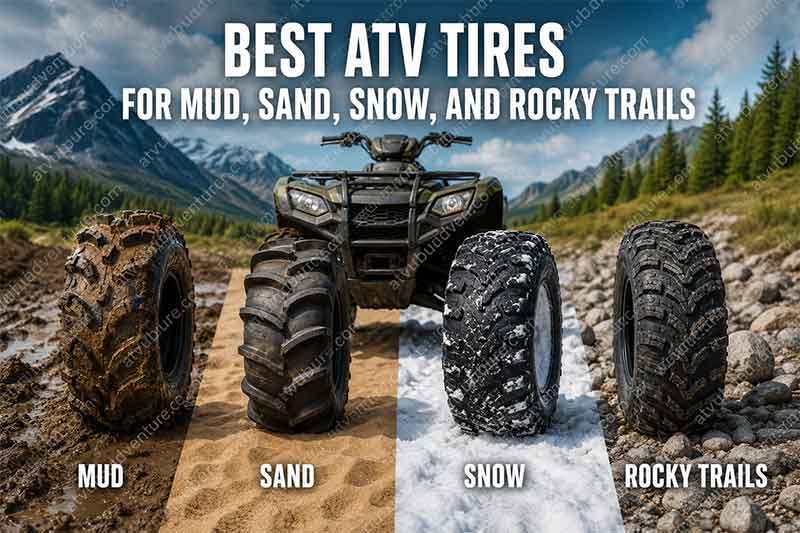
Choosing the best ATV tires for mud, sand, snow, and rocky trails can completely change your riding experience. Even the most powerful ATV will struggle if the tires aren’t designed for the terrain you’re riding on.
Different surfaces require different tread patterns, rubber compounds, and tire sizes. Whether you’re exploring muddy forests, climbing rocky hills, crossing sandy dunes, or riding through snowy trails, the right tires improve traction, handling, comfort, and safety.
This guide explains everything you need to know before buying ATV tires, including what works best for each terrain, maintenance tips, and common mistakes to avoid.
Why Choosing the Right ATV Tires Matters
ATV tires are more than just rubber that touches the ground. They determine how your machine accelerates, brakes, corners, and handles obstacles.
Using the wrong tires can lead to:
- Poor traction
- Faster tire wear
- Reduced fuel efficiency
- Difficult steering
- Increased risk of getting stuck
That’s why experienced riders often own multiple tire sets depending on where they ride most often.
If you’re new to ATV ownership, it’s also worth reading our guide on ATV maintenance tips for beginners to keep your machine performing at its best.
Best ATV Tires for Mud
Mud is one of the toughest terrains because it constantly tries to pull your ATV down.
The best mud tires typically feature:
- Deep, aggressive tread lugs
- Wide spacing between lugs
- Self-cleaning tread design
- Reinforced sidewalls
Deep tread helps dig through thick mud while throwing it away from the tire as it rotates.
Mud tires perform exceptionally well on swamp trails and wet forests but may feel rough and noisy on hard-packed ground.
If you enjoy muddy adventures, maintaining proper tire pressure is equally important. Check out our complete guide on ATV tire pressure to maximize grip and tire life.
Best ATV Tires for Sand
Sand requires a completely different approach.
Instead of digging into the surface, sand tires should float on top.
Look for features like:
Paddle-Style Tread
Rear paddle tires push the ATV forward without sinking.
Lightweight Construction
Lighter tires reduce the chance of burying the vehicle in soft sand.
Lower Tire Pressure
Running slightly lower PSI increases the contact patch and improves flotation.
Sand tires are ideal for beaches and desert dunes but aren’t recommended for rocky trails because the soft rubber wears quickly.
Best ATV Tires for Snow
Snow conditions change depending on temperature and depth.
Packed snow requires different traction than loose powder.
The best snow ATV tires include:
- Flexible rubber compounds
- Medium tread depth
- Numerous biting edges
- Optional stud compatibility
Soft rubber stays flexible in freezing temperatures, providing better grip on icy surfaces.
Always ride cautiously because even excellent snow tires can’t eliminate slippery conditions.
Best ATV Tires for Rocky Trails
Rocky terrain demands durability above everything else.
Sharp stones can easily damage standard ATV tires.
The best rock tires feature:
Thick Sidewalls
Extra protection reduces punctures and sidewall cuts.
Multi-Directional Tread
Improves grip while climbing uneven surfaces.
Strong Rubber Compound
Harder compounds resist abrasion from rocks.
Rock crawling often requires careful throttle control rather than aggressive acceleration.
All-Terrain ATV Tires
Many riders don’t stick to one terrain.
If your weekend adventures include forests, gravel roads, mud patches, and rocky climbs, all-terrain tires are often the smartest investment.
Benefits include:
- Balanced traction
- Longer lifespan
- Better comfort
- Lower maintenance
- Excellent versatility
While they won’t outperform specialized tires in extreme conditions, they provide reliable performance almost everywhere.
Factors to Consider Before Buying ATV Tires
Choosing ATV tires isn’t just about tread design.
Several other factors affect performance.
Tire Size
Always follow your ATV manufacturer’s recommended tire size unless you’re making suspension modifications.
Larger tires provide better ground clearance but may reduce acceleration.
Ply Rating
Higher ply ratings generally offer:
- Better puncture resistance
- Stronger construction
- Improved load capacity
However, they can also create a firmer ride.
Riding Style
Ask yourself:
- Do you mostly ride recreationally?
- Are you racing?
- Do you haul equipment?
- Do you explore technical mountain trails?
Your riding style should influence your tire choice more than appearance.
How Tire Pressure Affects Performance
Even premium ATV tires perform poorly with incorrect air pressure.
Low pressure improves traction on soft surfaces like sand and mud.
Higher pressure works better for hard-packed trails and rocky terrain because it protects the tire from impacts.
Always check pressure before every ride.
Tire Maintenance Tips
Proper maintenance extends tire life and keeps your ATV performing safely.
Here are a few simple habits:
- Inspect tires before every ride.
- Remove embedded rocks.
- Check for cracks and punctures.
- Rotate tires when possible.
- Store your ATV away from direct sunlight.
If you notice uneven wear or frequent punctures, you may also want to read our article about common ATV problems and how to fix them.
Common Mistakes When Choosing ATV Tires
Many first-time buyers focus only on appearance.
Here are mistakes worth avoiding.
Buying the Most Aggressive Tires
Huge mud tires look impressive but aren’t practical for everyday trail riding.
Ignoring Terrain
One tire doesn’t excel everywhere.
Think about where you actually ride most often.
Forgetting Weight
Larger tires add rotating mass, which affects acceleration, braking, and fuel consumption.
Choosing Cheap Tires Only for Price
Budget tires may save money initially but often wear faster and deliver less traction.
Quality tires usually offer better long-term value.
Frequently Asked Questions
What are the best ATV tires for mixed terrain?
All-terrain ATV tires are the best option if you regularly ride across dirt, gravel, mud, and rocky trails. They provide balanced performance without sacrificing too much in any single condition.
Are mud tires good on rocks?
Mud tires can handle rocks, but they aren’t ideal. Their tall, widely spaced lugs wear faster on hard surfaces and provide less stability than dedicated rock tires.
Can I use sand tires on normal trails?
It’s not recommended. Sand tires wear quickly on dirt and rocky surfaces and offer poor handling outside soft terrain.
How long do ATV tires last?
Most ATV tires last between 3,000 and 8,000 miles depending on riding style, terrain, maintenance, and tire quality.
Should I replace all four ATV tires at once?
Replacing all four is generally recommended to maintain balanced handling and traction, especially if the existing tires show uneven wear.
Final Thoughts
Finding the best ATV tires for mud, sand, snow, and rocky trails isn’t about buying the most expensive option. It’s about matching the tire to the terrain you ride most often.
Mud tires excel in deep, wet conditions. Sand tires float across loose surfaces. Snow tires provide cold-weather grip, while rock tires deliver durability on challenging trails. If your adventures take you across a variety of landscapes, high-quality all-terrain tires are often the most practical solution.
Taking care of your tires through regular inspections, proper inflation, and routine maintenance will also improve performance and help you get the most value from your investment.
If you’re planning an unforgettable ATV experience in Bali, ATV Ubud Adventure offers exciting off-road tours through jungles, rice fields, muddy tracks, rivers, and hidden natural scenery around Ubud. Learn more about our Best ATV Bali Experience or discover why ATVs are so popular for outdoor adventures before your trip.
For bookings and inquiries, visit ATV Ubud Adventure, contact us via Phone/SMS/WhatsApp: +6287877066948, or simply click the Chat button on our website to reserve your next adventure.